
New Orleans Through an Italian American Lens: From Parade Float to a 1200 Pound Pasta Bowl
TRAVEL
HOW ITALIAN AMERICAN TRADITION STILL MOVES THROUGH NEW ORLEANS.
I went to New Orleans to ride in the Italian American parade and spend time behind the scenes at the largest pasta event I had ever heard of. They had me at 500 pounds of pasta and I was there wanting to see how something on that scale could possibly unfold.
What I didn’t expect was to fall for a city that met me with welcoming energy, a deeply rooted food culture, and music that seemed to move through every street corner.
New Orleans felt alive in a way few places do.
And if there’s one time to experience it, it’s during parade season.
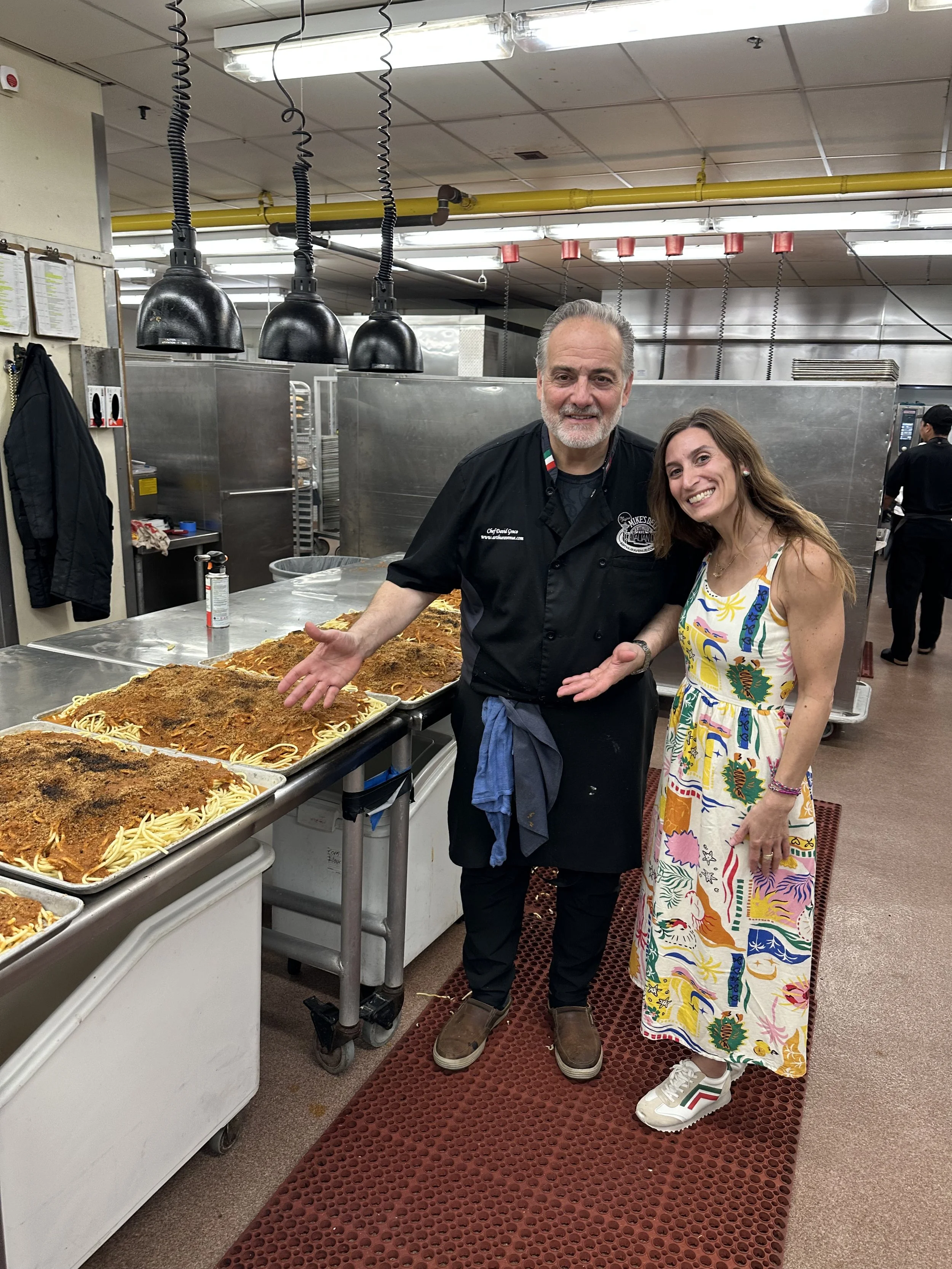
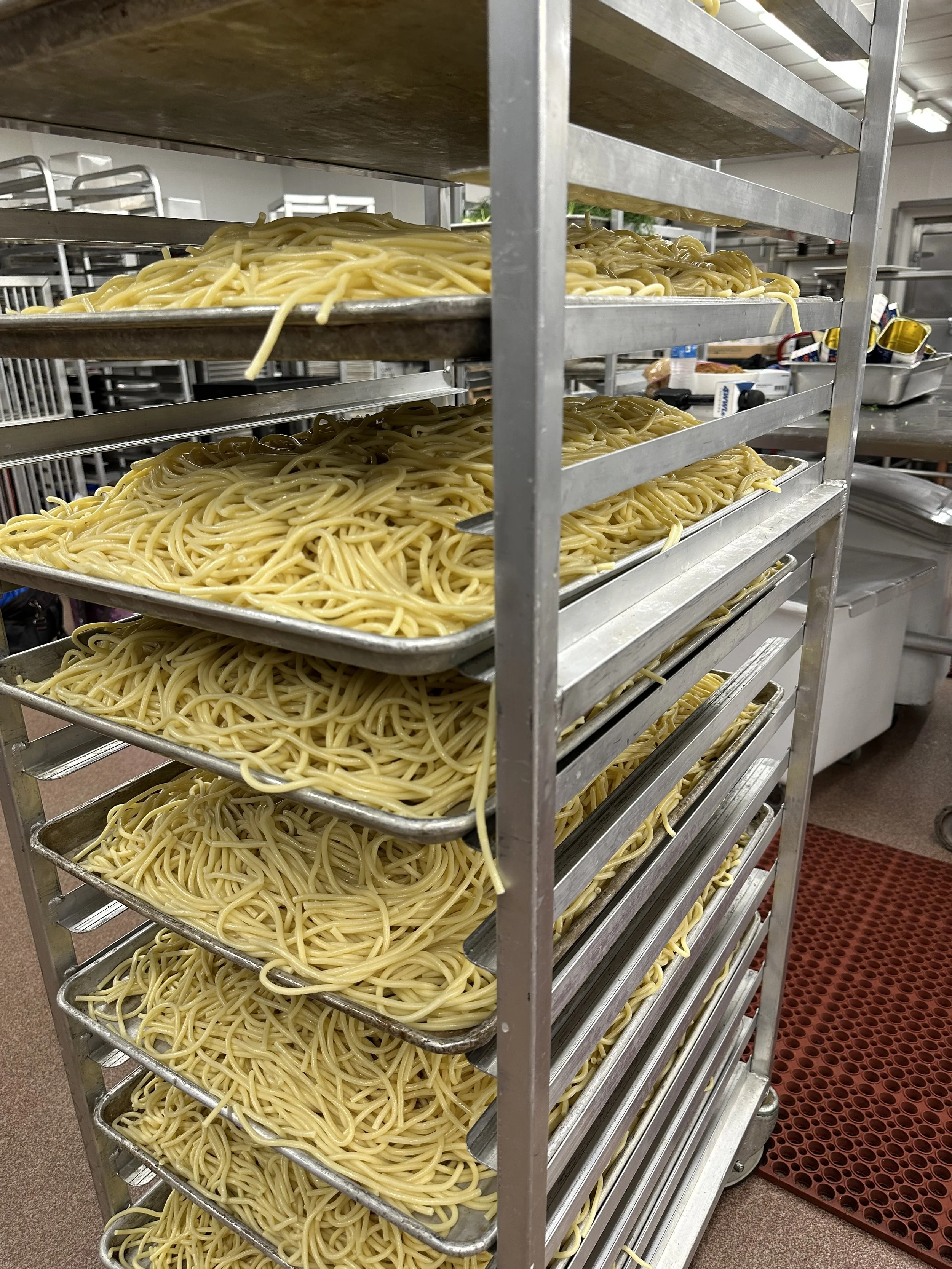
Behind the scenes of 500 pounds of pasta.
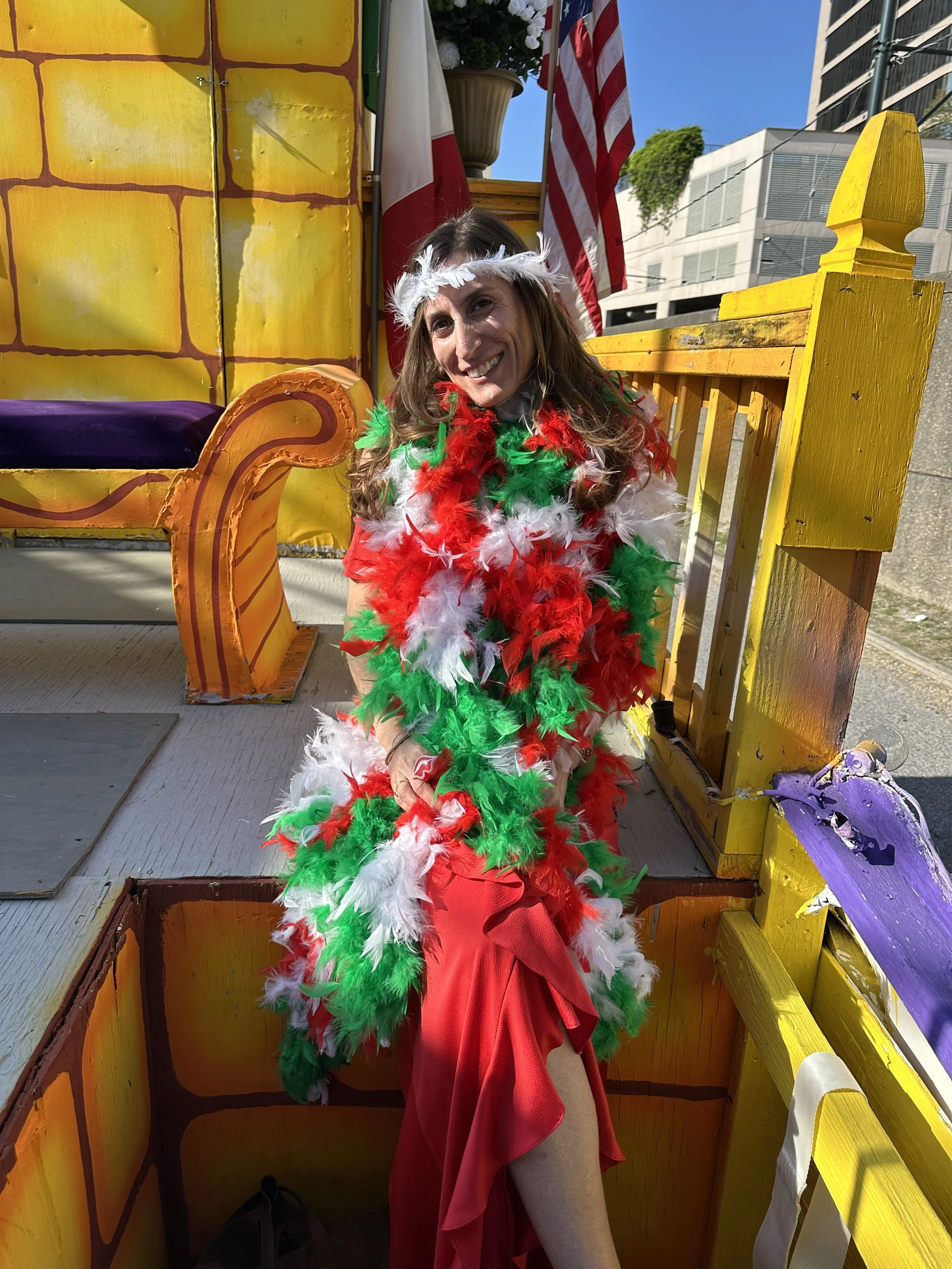
Riding the parade season in New Orleans.
A City You Don’t Schedule
I stayed in the Garden District, where mornings began slowly and without structure. I worked from a small café, rode the St. Charles cable car, and made my way down Magazine Street, drifting in and out of shops and galleries along the way.
At one point, I went looking for music inside a jazz club—but ended up sitting on the street instead, captivated by a cute band from the Netherlands dressed in their finest pink playing in the street to pay homage to the jazz history of this charming city.
Nothing in New Orleans unfolds in a straight line. Streets bend into unexpected moments, and plans dissolve into something better than what you set out to find.
The city doesn’t ask to be scheduled. You move through it, and it reveals itself piece by piece.
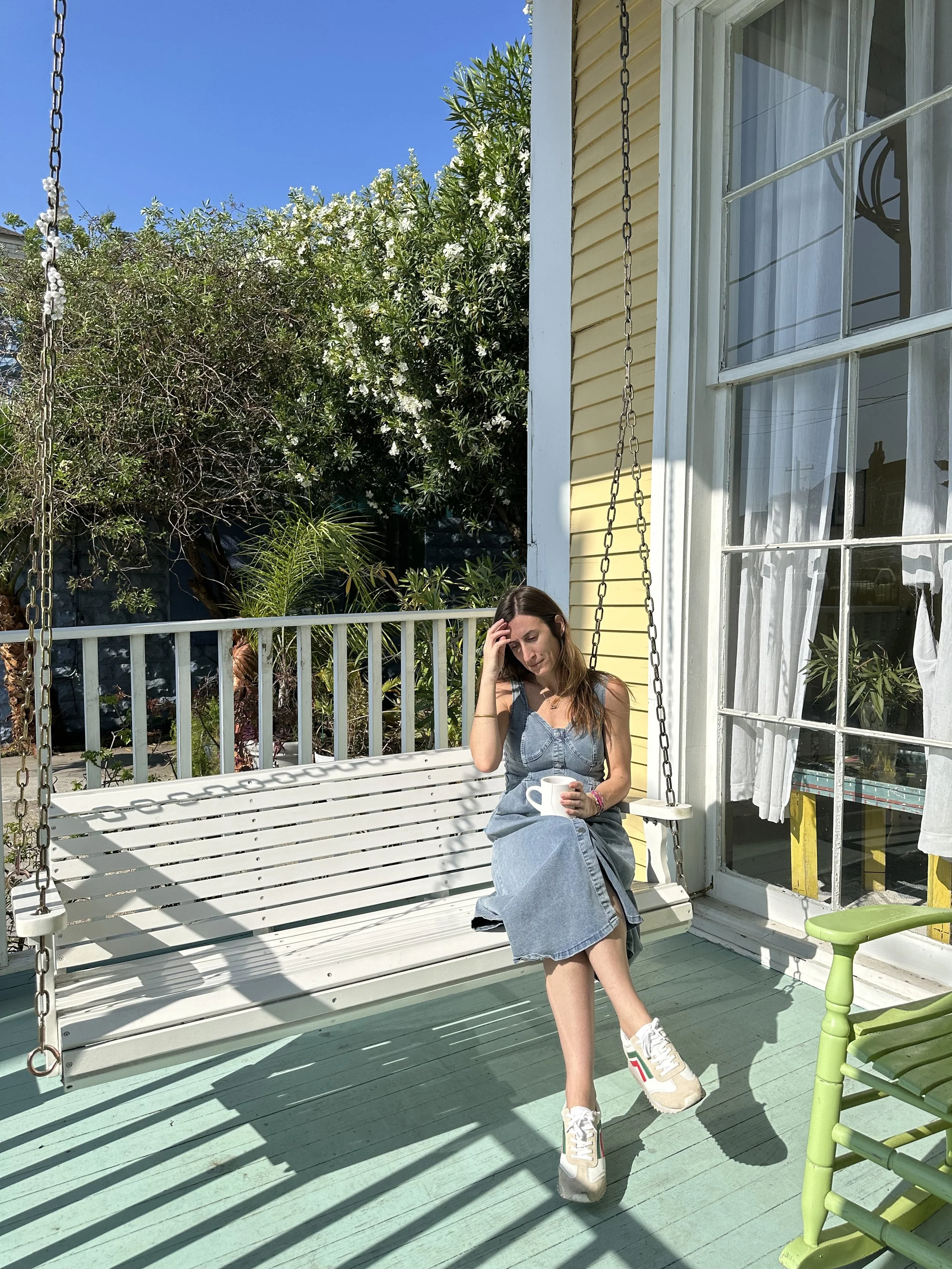
Enjoying a tea on the porch at Creole Gardens Inn & Guesthouse.
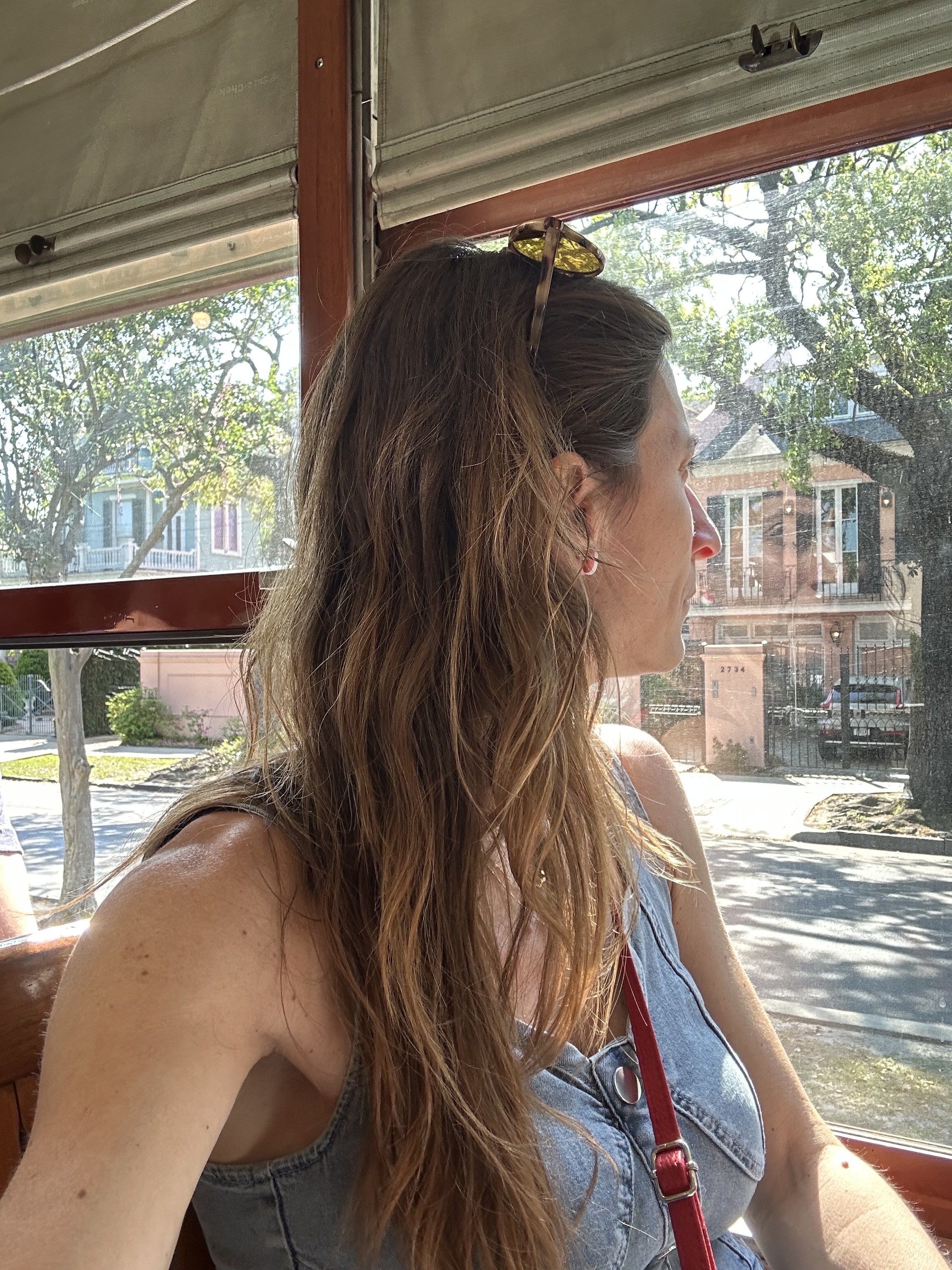
Peering out the window on the St. Charles cable car.
How Food Tells the Story of a City
I came to New Orleans with a larger-than-life list of dishes and places I felt I had to experience. From Creole classics to gumbo, it felt overwhelming in the best way. Between the parade and the pasta event, I tried to fit in as much as I could—organizing my days loosely around meals rather than time.
That meant creole crab dip for breakfast on a rainy Sunday morning, or skipping a traditional breakfast altogether so I could have a shrimp po’ boy before the parade. It also meant stopping for something small and unplanned before dinner, just to keep moving through it all.
There were dinners at Mr. B's Bistro, where the atmosphere felt elevated and intentional, followed by an unexpected performance by Lena Prima that turned the evening into something more layered than just a meal.
At Pesce Seafood House, a simple shrimp toast felt inventive and unplanned in the best way, while venturing to the end of a neighborhood for a shrimp po’ boy from an Italian joint became one of those perfectly timed meals before a much anticipated event.
Beignets at Café du Monde reminded me of Italian zeppole—different cities, same sense of simplicity and comfort.
What stood out most wasn’t just the food itself, but how many of these places carried stories of Italian immigration, adaptation, and influence. Nearly everywhere I went, there was a thread connecting culture to cuisine in ways that felt both subtle and deeply present.
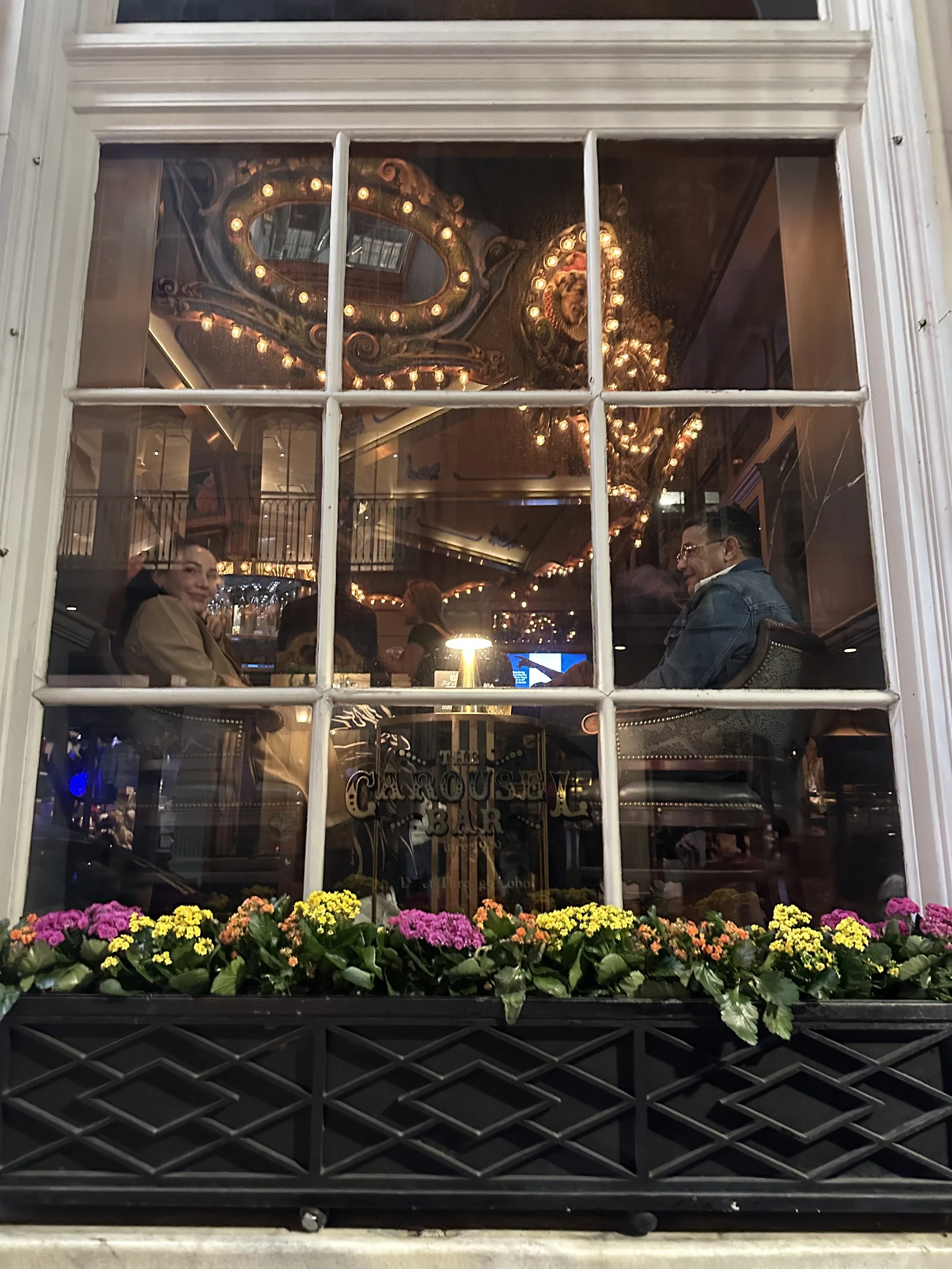
Outside looking in to the Carousel Bar.
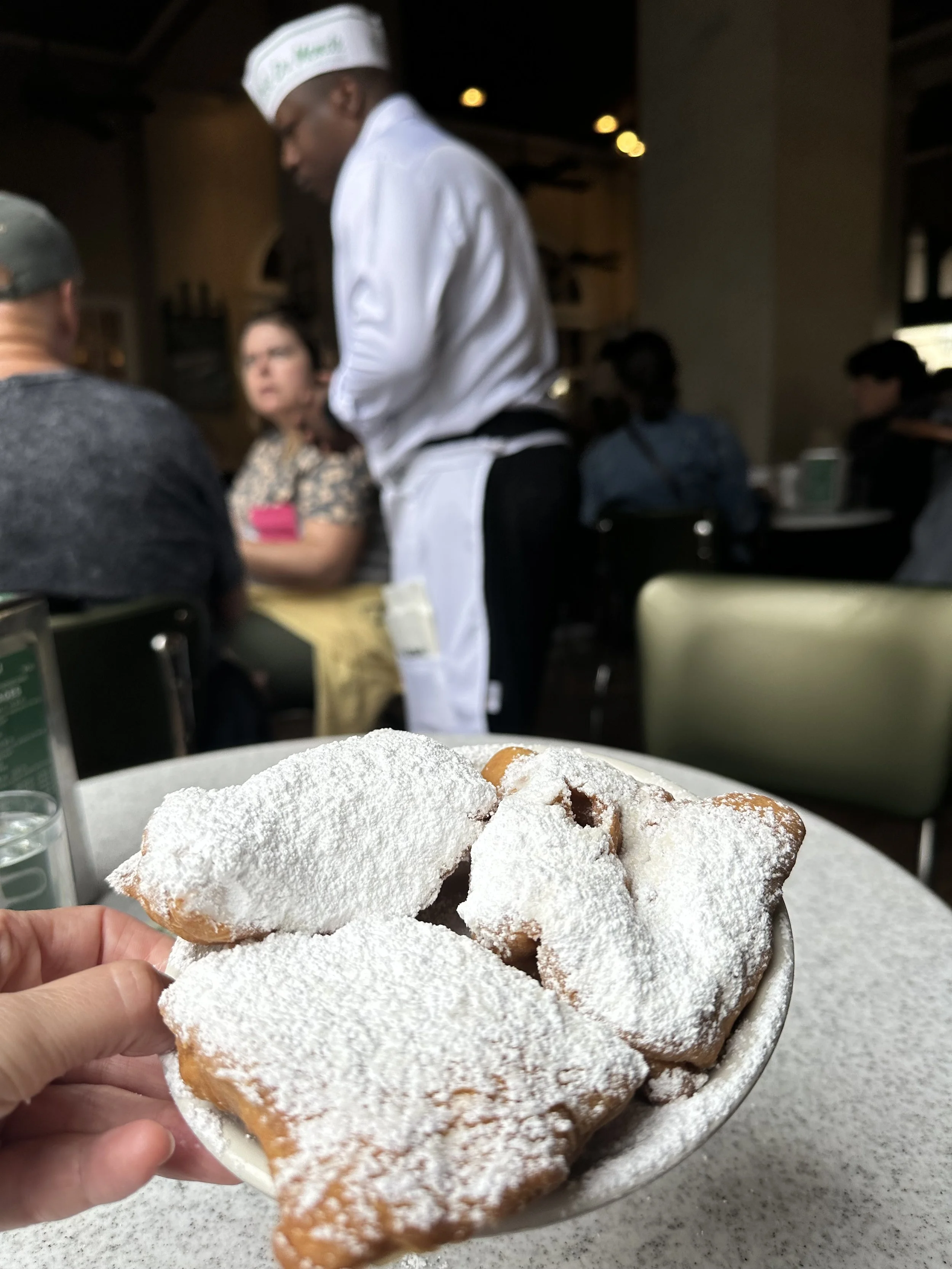
Beignets at Café du Monde.
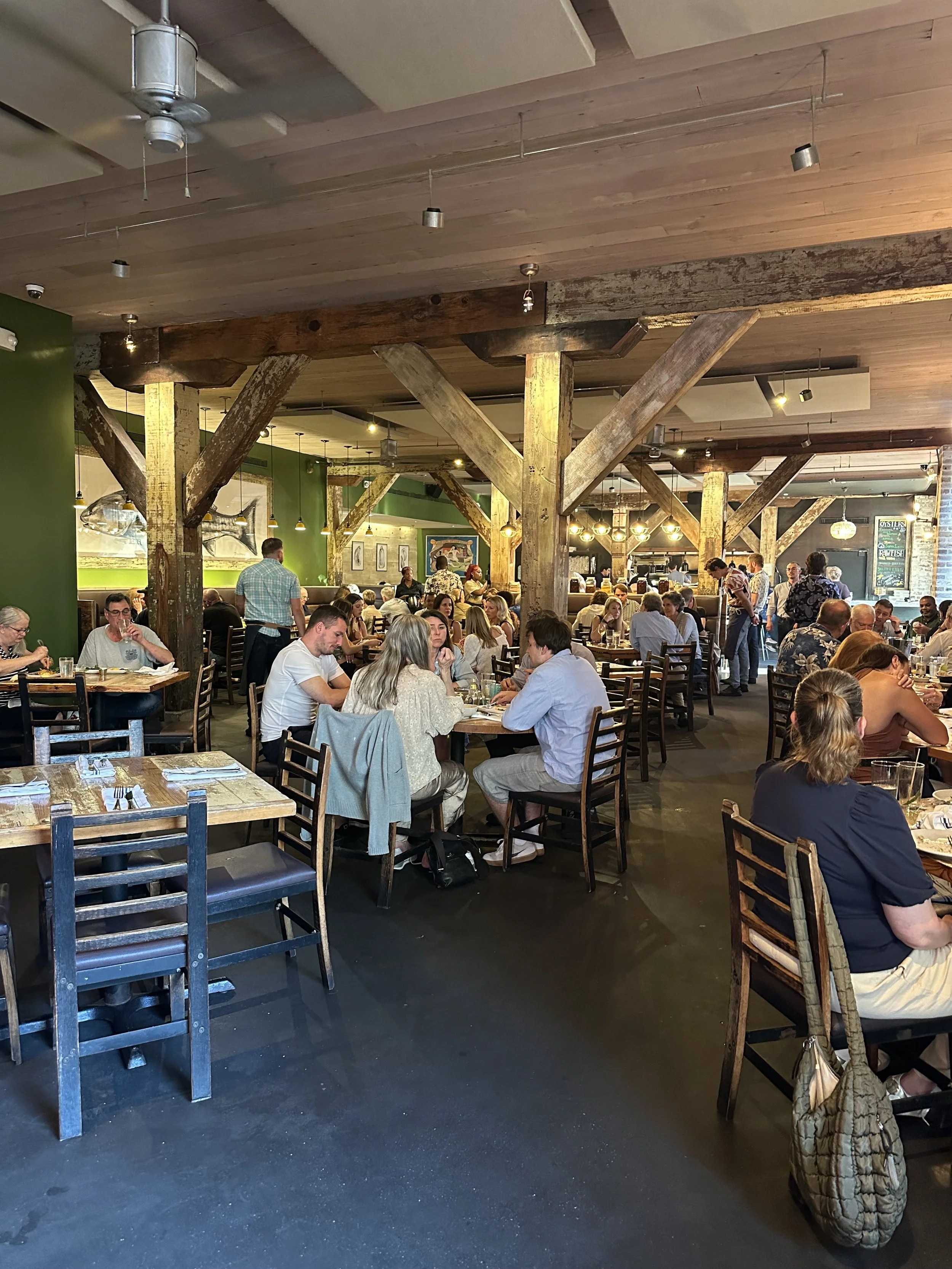
Bustling dining scene at Pesce.
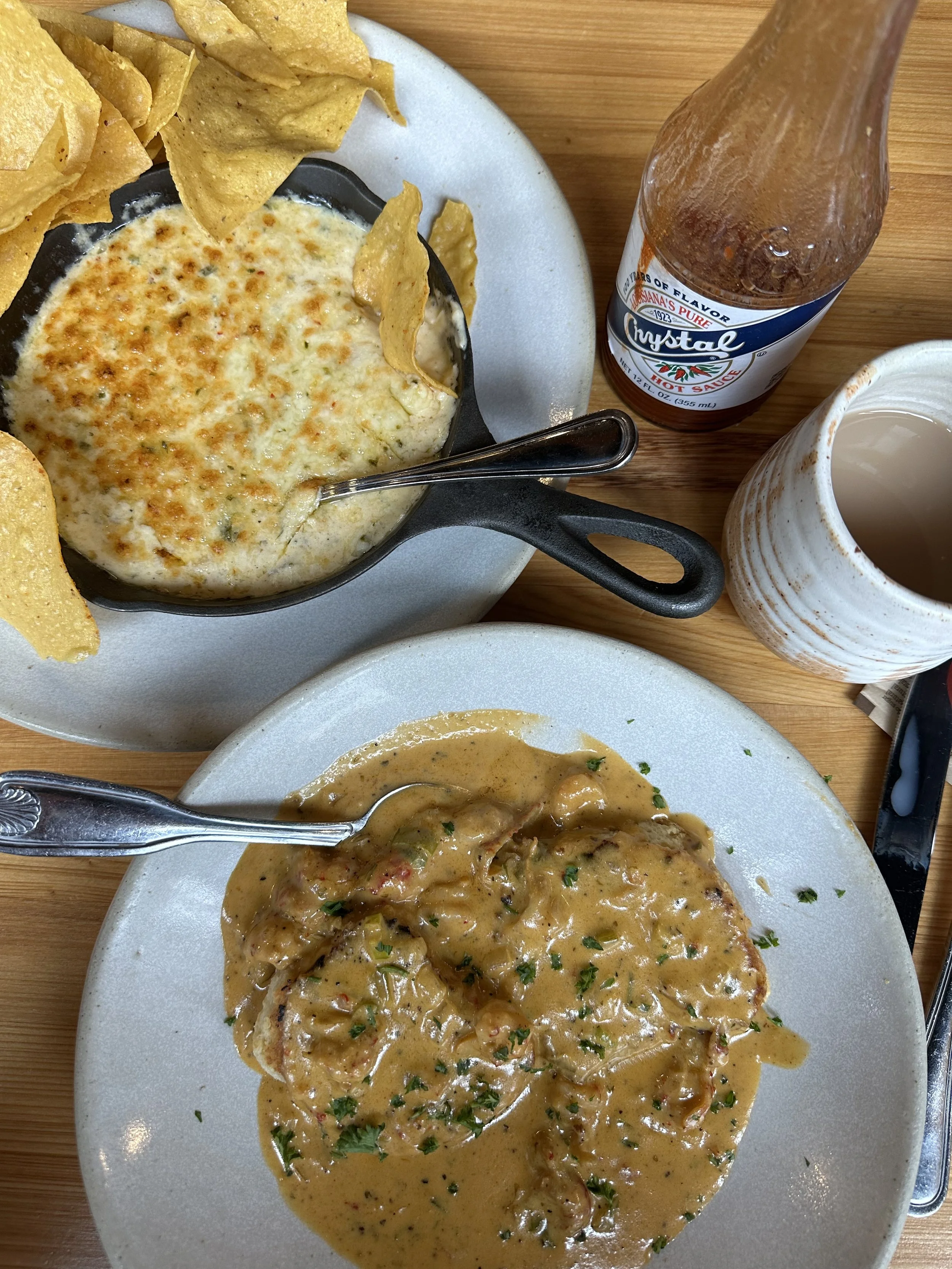
Southern style breakfast at Bearcat.
The 1200 Pound Pasta Event
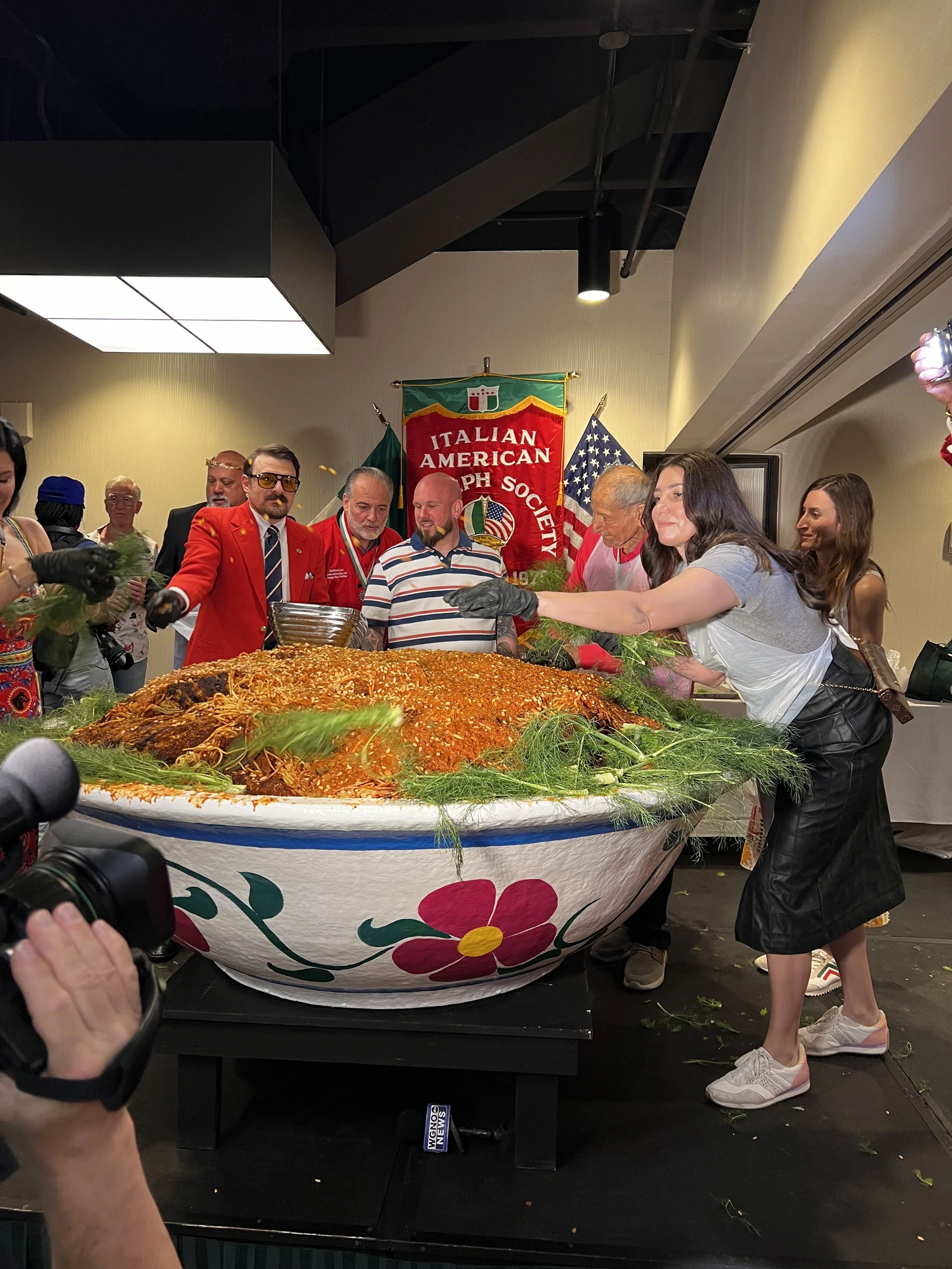
One of the main reasons I came to New Orleans was to be part of a behind-the-scenes pasta event hosted by the Italian American St. Joseph Society New Orleans, where Chef David Greco came down from his Arthur Avenue deli in the Bronx to cook 500 pounds of pasta.
I had heard this was the event to be part of—chaotic, deeply rooted in Italian American tradition, and full of pride and energy in the way only these gatherings can be.
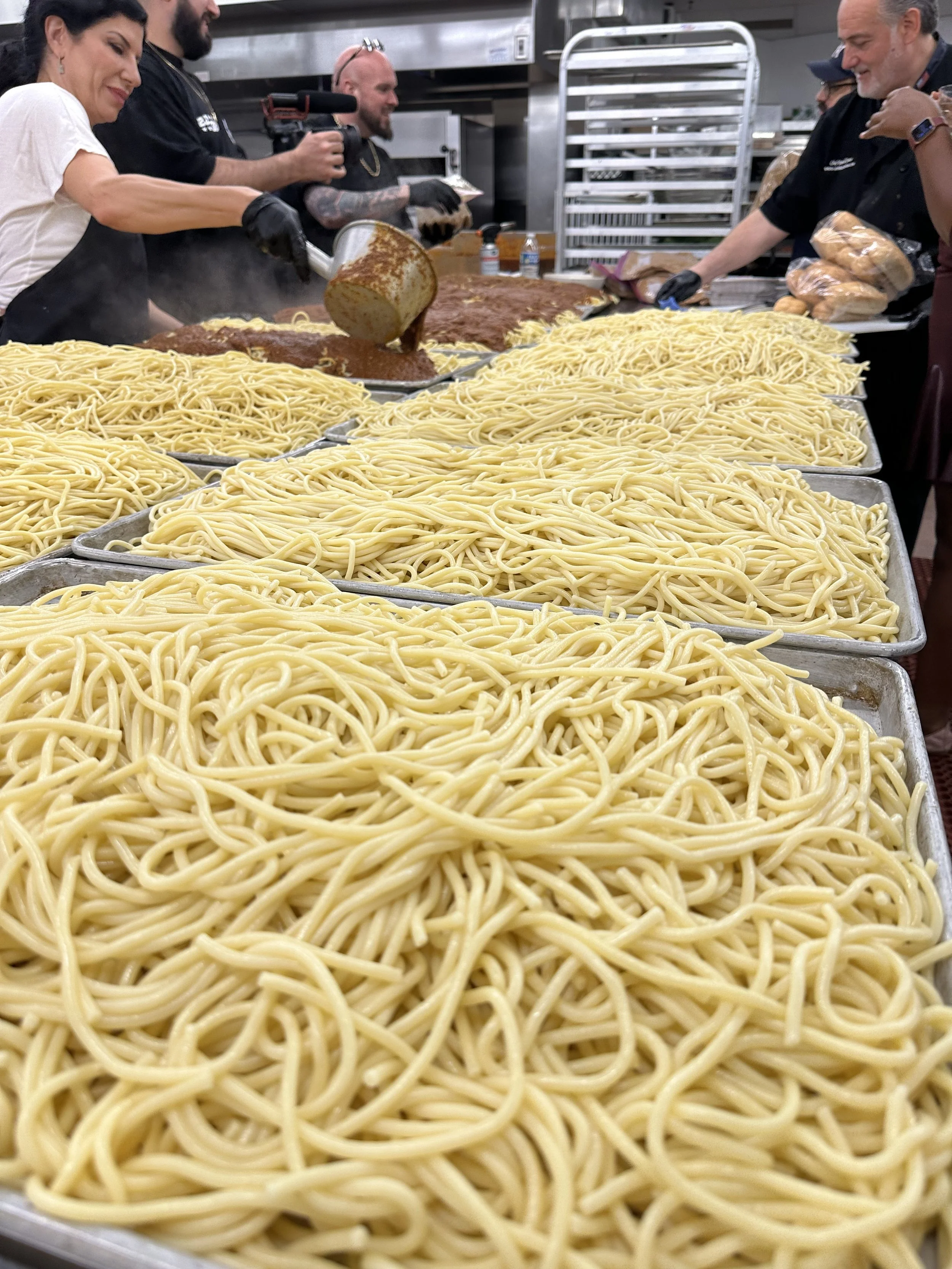
It started quietly in the kitchen—trays stacked, preparation underway, everything still in its early form. But even then, you could feel the scale of what was coming. Sauce was prepared in massive quantities, heavy trays moved between counters and storage, and every step felt like it was building toward something larger than a single moment.
I even jumped in—pouring sauce, sprinkling breadcrumbs, helping where I could. We were making pasta con le sarde, a Sicilian dish that reflects the roots many Italian American families in New Orleans trace back to Sicily.
What began as 500 pounds of dry pasta became over 1,200 pounds once prepared. 🎥 Watch us make it here:
It wasn’t just cooking—it was a reflection of Italian American identity. Family, heritage, and community all gathered around one shared act of making something enormous together.
What stood out wasn’t only the scale, but the precision behind it—and the sense of aliveness in the room as everything came together.
New Orleans Community & Connection
Beyond the scale of the pasta event, what stayed with me most was the sense of community that surrounded it.
I spent time with members of IASJS—people who carry tradition not as something spoken about, but something lived through food, gathering, and shared moments like this one.
There was an ease in the way everyone moved. Conversations flowed naturally between groups, people were welcoming without hesitation, and nothing felt overly staged or formal. It felt like stepping into something already in motion, something I had been invited into and welcomed as if I belonged there.
What struck me most was how naturally culture expressed itself here—not as performance, but as participation. People showed up, contributed, and connected through the simple act of creating something together.
And in the middle of all of this, there were smaller, quieter moments that stayed with me just as much as the larger ones—conversations that didn’t feel planned, and exchanges that reminded me how quickly connection can form when you’re fully present in a place.
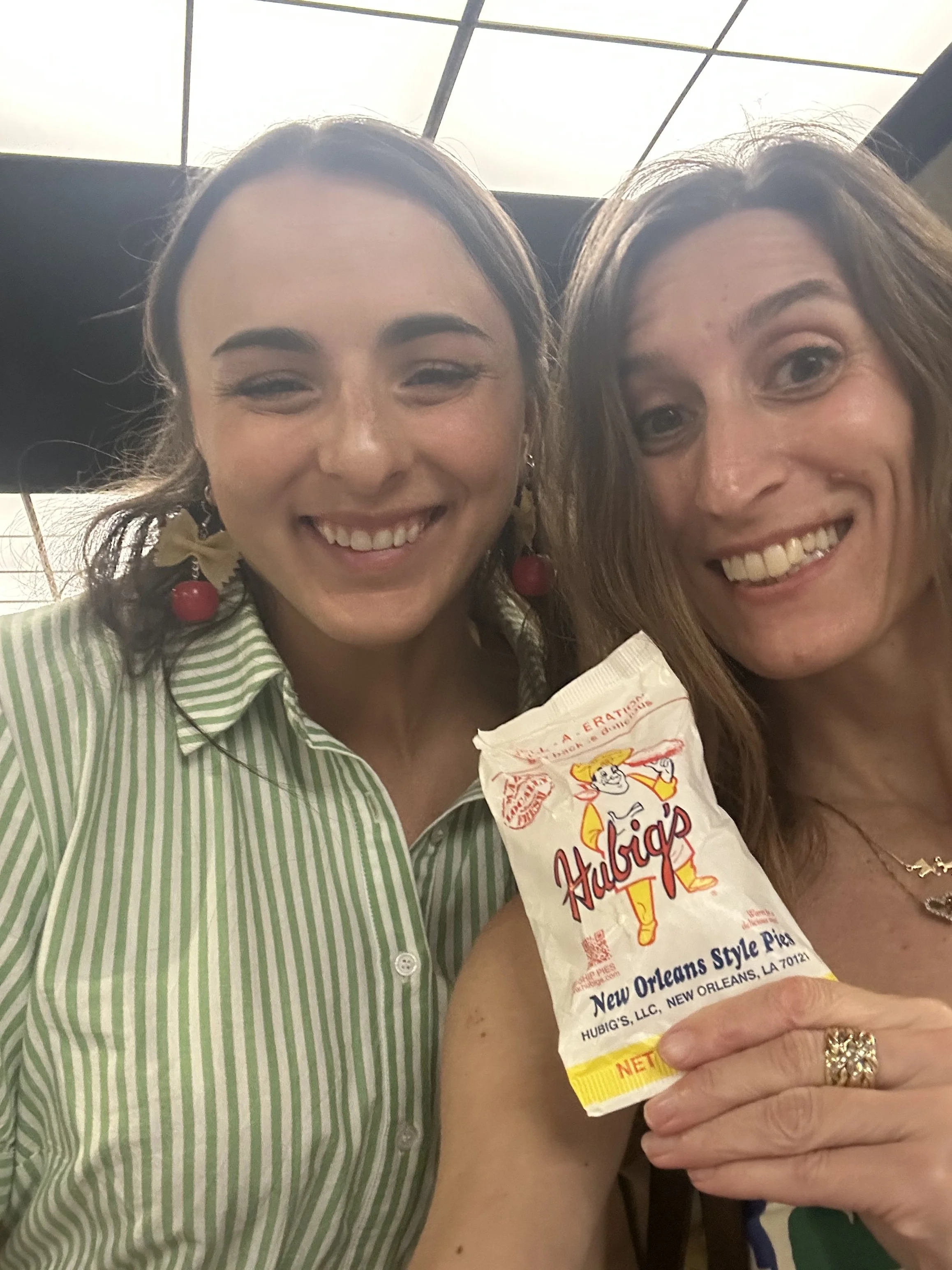
Gifted a Hubig’s pie by Julianna.
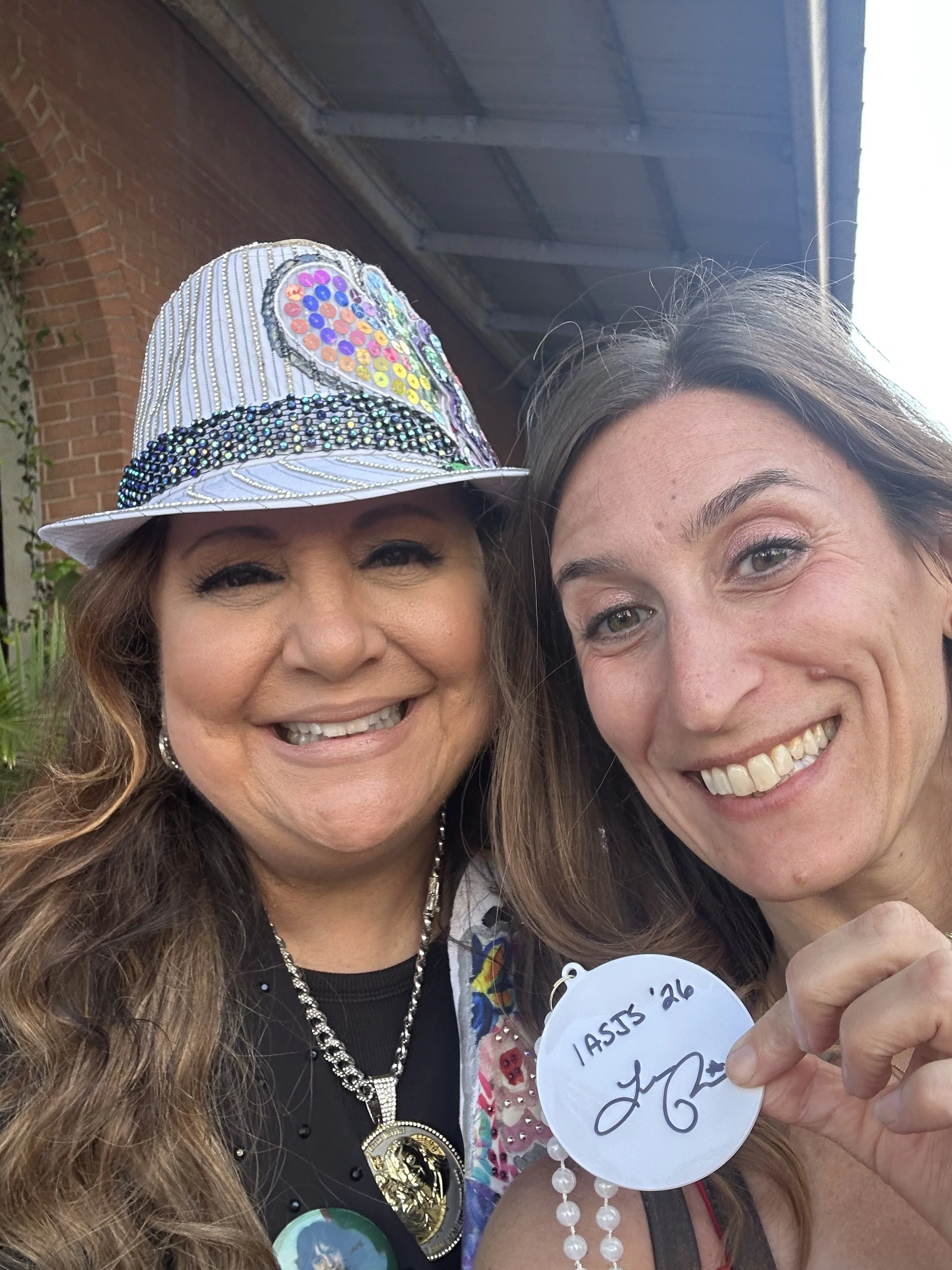
Gifted a signed bead by Lena Prima.
The Italian American Parade
By the time the Italian American parade arrived, the city already felt familiar in a way it hadn’t at the beginning.
What had started as observation had turned into participation. Standing on the float, surrounded by color, sound, and movement, everything felt amplified—the streets, the music, the energy of people gathered not just to watch, but to be part of something.
Throwing beads into the crowd, moving through blocks filled with celebration, it felt less like an event and more like the city expressing itself at full volume.
If there’s a way to experience New Orleans, it’s during a parade like this—when the city stops being something you observe and becomes something you’re part of.
In that moment, New Orleans wasn’t something I was visiting anymore. I was inside it.
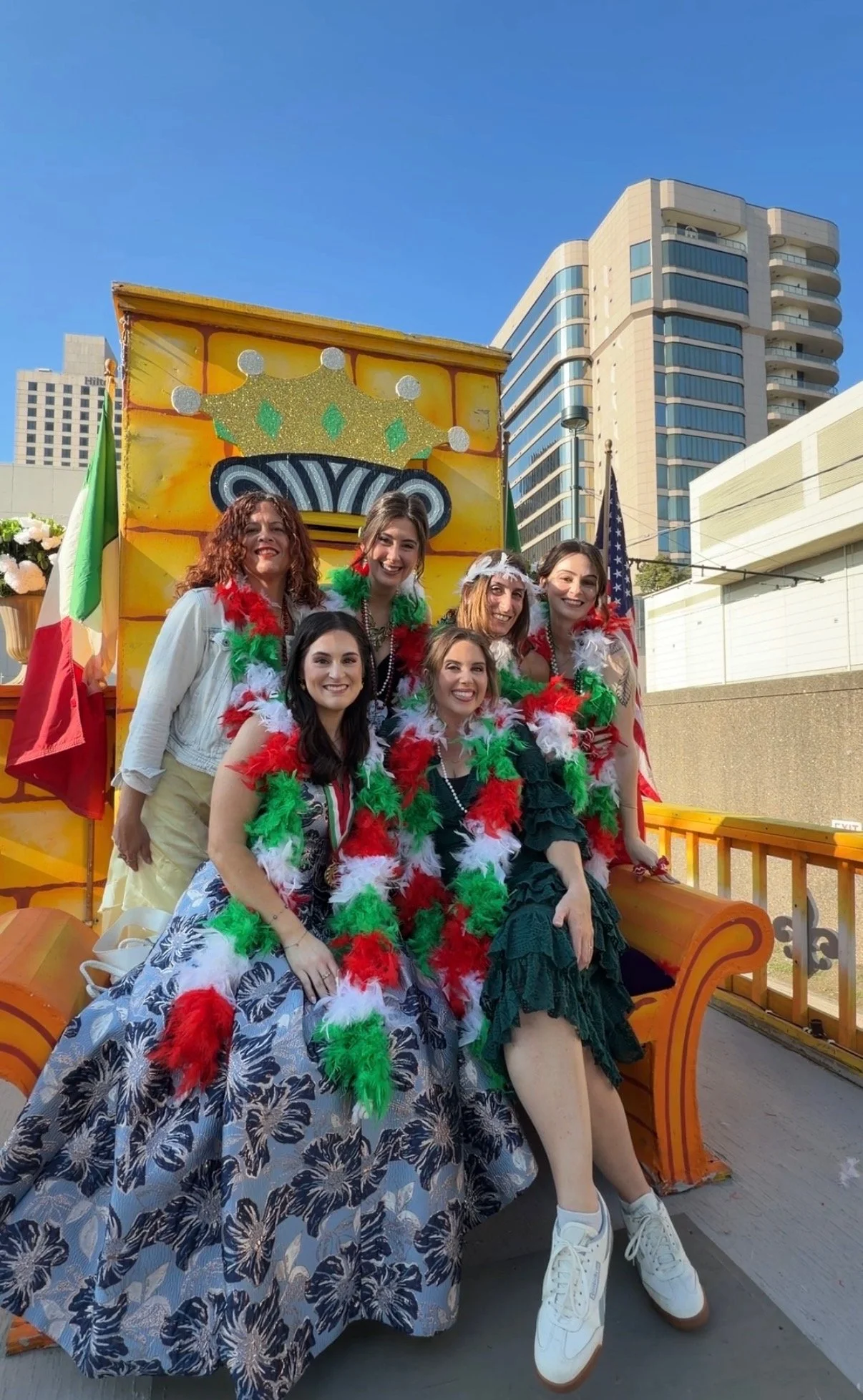
Our parade float crew.
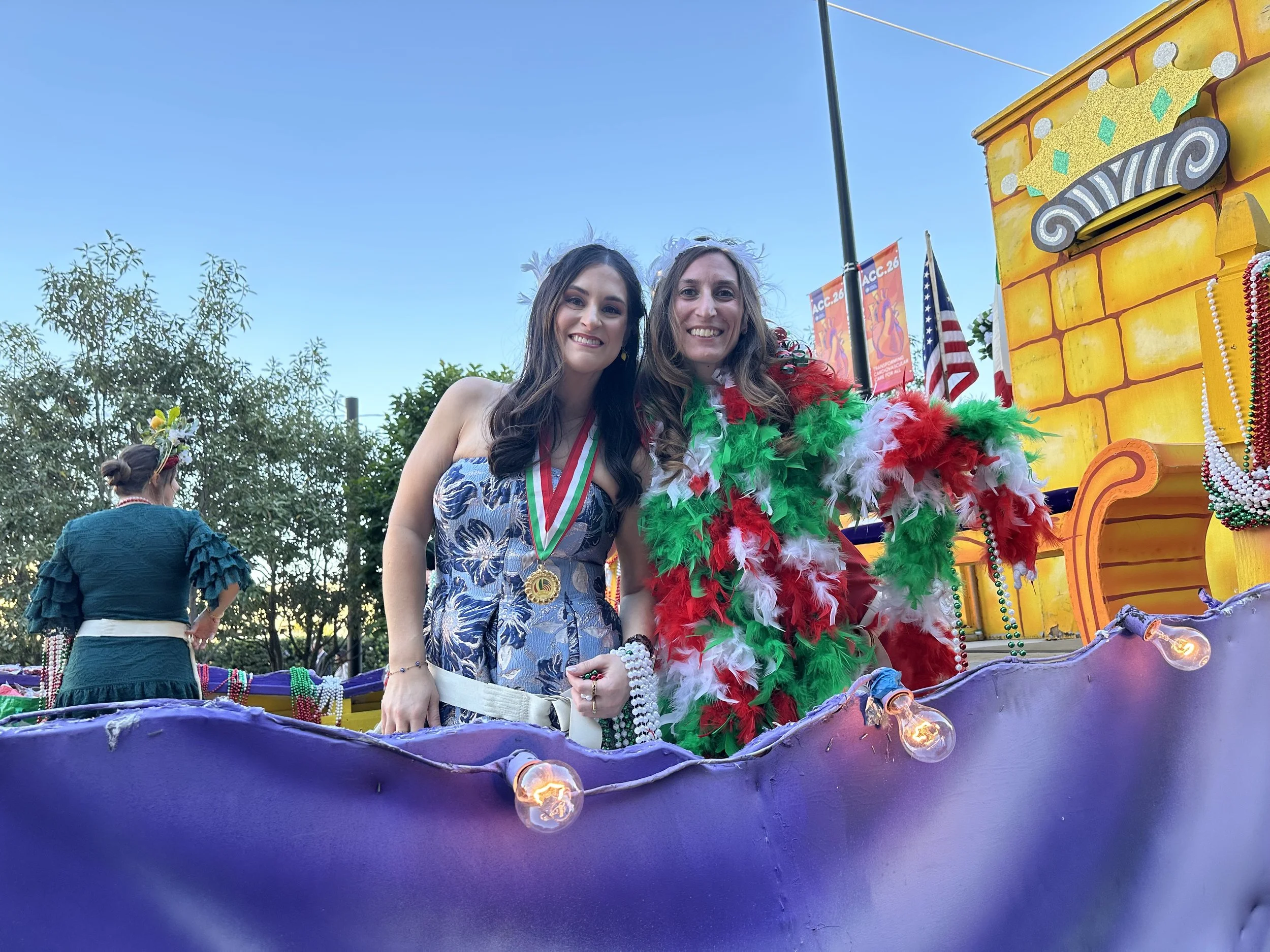
Posing with Ashleigh, the person who invited me here!
Final Thoughts
On my last day, I moved through the city without much direction—back through the French Quarter, along familiar streets, and through places that now felt less like discovery and more like memory.
There was no single moment that defined the trip. Instead, it became a layering of experiences: the parade, the pasta party, conversations, meals, and the small in-between moments of being welcomed into a community that felt connected to something familiar.
I came to New Orleans for a parade and a pasta event.
But I left shaped by the food, the people, and a city that revealed itself slowly. And in the same way I arrived as an observer, I left feeling like I had briefly become part of it.
New Orleans doesn’t just host you. It lets you in.
Learn More
If you’d like to learn more about the Italian American St. Joseph Society New Orleans or support their work preserving tradition through community events, you can visit their official site here:
👉 [Italian American St. Joseph Society New Orleans]
Their events are open to the public during key celebrations and parade season.
Credits
Chef David Greco — Mike’s Deli, Arthur Avenue, Bronx, NY
Italian American St. Joseph Society New Orleans
Enjoy stories about Italian heritage, food, and travel?
Join my Substack for Letters From Christina—personal reflections, behind-the-scenes stories, and exclusive subscriber content. [Subscribe]

Read All the Latest Articles
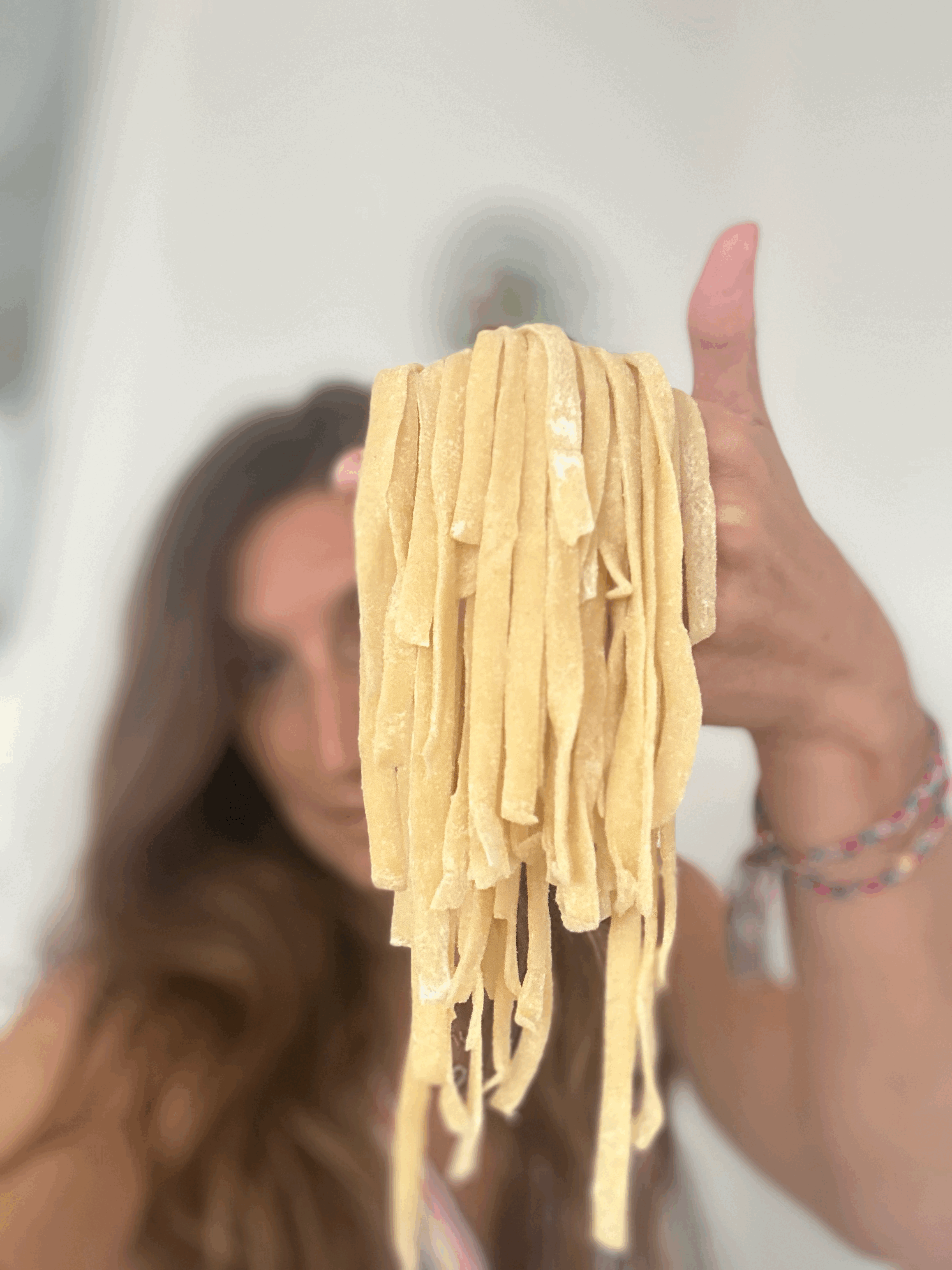

A simple, comforting stracciatella soup made with broth, pastina, egg, and Parmesan—just like my Nonni used to make. A family recipe recreated from memory, with a little help from Mom.